

AnyDesk ������� ��������� ��������� ������
We can also see that the disk in Slot07 was recently swapped, and that Slot08 does not contain a disk and its locate LED is activated. SES provides a mechanism to query information from the enclosure, including temperature, fan speed, and status of power supplies. Many backplanes include support for SCSI Enclosure Services (SES).
- Keeping it spinning but not accessing data is safer.
- SATA disks plugged directly into the motherboard use an interface called AHCI which does not provide much in the way of advanced management features.
- If you’d feel safer with a team of experts monitoring your storage, consider a ZFS Support Subscription.
- It is fairly well-known among techies that hard drives used in server-like workloads can suffer from poor configuration by default such that they frequently load and unload their heads, which can cause disks to fail much faster than they otherwise would.
- It also provides information about each slot in the enclosure (even if empty), including a flag to indicate if the device has recently been swapped.
- Sesutil can also be used to locate the disk in the physical array.While the SES data tells us that there is an 8 TB disk in Slot 06, it does not tell us which slot in the chassis corresponds to 06.
Head parking clicking on new disks – all manufacturers.
The timer values specified are in milliseconds, so this example will park the disk heads after 30 minutes of inactivity. If we wanted to allow the disk to still park its heads but at minimum frequency, setting the APM value to 7Fh (hdparm -B 127) seems to be the correct choice. Of the three disks that I decided need some attention, I have one Western Digital disk and two Seagate ones.
Whether you are a computer technician in charge of technical support or a student who needs to work together with their classmates, AnyDesk is the program you are looking for. Then, click on “Connect” to access the other device. Send it to the other user who has the program and they will be able to access and control your device. It is very popular among professionals who provide technical support. Remember, the key is to act quickly and use the right tools for your specific situation. These practices and tools should give you a solid starting point for recovering your deleted files.
It’s hard to imagine why your drives are that loud! It’s a datacenter drive, very loud, so it’s still audible. For quietness, a noise reducing case, move it somewhere else, quieter drives, maybe SSD instead of hard drives, etc.
Developer reply
I will optimize settings later for the security/quietness tradeoff however, I’m very pleased with it for now. How can I set this value on the Truenas interface? Keeping it spinning but not accessing data is safer. I would still recommend against idling your drive as that reduces longevity. I also set the tunable vfs.zfs.txg.timeout to a somewhat large value so the regular syncs don’t happen every 5 seconds.
Can I setup automatic connection without a password on AnyDesk?
My question is – is there a way to tell if a certain disk suffers from the issue prior to purchasing? For the system I’m monitoring here, the SSD that it boots from has a wearout indicator sitting on 95 of 100 (only 5% of the rated life consumed), visibly unchanged for a long time so it’s not very interesting as an example. (The properties like ID_SERIAL_SHORT can be queried on a running system using udevadm info, such as udevadm info /dev/sdd to get the properties of the disk currently assigned ID sdd.) Somewhat more useful for monitoring is the smartmon_load_cycle_count_raw_value, which provides the actual number of load cycles that have been done. Secondly what are your disk monitoring refresh intervals and what do you use on your system to monitor SMART disk health?
Remote Desktop Manager
FreeBSD’s sesutil is a tool to interface with the SES devices on your system. You should also configure smartd to monitor your disks and send you alerts, which may give you advanced notice when a drive is starting to fail. These special boards, called SAS Expanders, reduce the total cabling required to provide power and signal pathways to all connected disks.
- AnyDesk allows you to establish remote desktop connections between devices and opens up unprecedented possibilities of collaborating online and administrating your IT network.
- I also set the tunable vfs.zfs.txg.timeout to a somewhat large value so the regular syncs don’t happen every 5 seconds.
- Then, click on “Connect” to access the other device.
- NVMe connects storage devices directly to the PCIe bus, offering extremely low latency and high throughput.
- The status field is a bitmask supporting a number of different options, but the main ones we care about are 1 (OK), and 2 (FAULTED).
- When dealing with critical data, you only get one chance to do it right.
Understanding Storage Protocols
It is fairly well-known among techies that hard drives used in server-like workloads can suffer from poor configuration by default such that they frequently load and unload their heads, which can cause disks to fail much faster than they otherwise would. My Seagate Archive SMR disk (which began life as an external hard drive and was retired from that role when it became too small to hold as much as I wanted to back up to it) apparently doesn’t support reporting EPC settings (since asking for them says so), and initially didn’t accept new values for the idle timers either. The Prometheus Node Exporter is the canonical tool for capturing machine metrics like utilization and hardware information with Prometheus, but it alone does not support probing SMART data from storage drives. While SSDs don’t have any heads to park, most do report a media_wearout_indicator that represents the amount of data written to the device in relation to the amount that reveryplay it’s specified to accept before the Flash storage medium wears out.
SAS disk reservations provide the ability to connect to the disk redundantly—or even across multiple machines—while ensuring it is only used by one of them at a time. SAS provides many more features than SATA does—including full duplex operations, advanced error recovery, multipath, and disk reservations. It too was an extension on an existing interface bus which offered greatly improved performance. SATA+AHCI improved data transfer speeds, simplicity of communication, and included abilities that we today take for granted, such as “hot swap” and command queueing. These concepts also apply to other operating systems, but the tools might differ slightly.
Below we will discuss exactly how to do this with FreeBSD’s sesutil or the management tools for your HBA. Though a truism, it bears emphasizing that with a little planning, management and maintenance of storage systems can be made easier and safer. The total throughput possible from the connected disks is still limited by the number of lanes available, but this is likely the best approach in systems with more than a dozen disks.
I moved the system dataset to the boot pool. I don’t move any data, no apps are running, this is a vanilla Scale install so far, yet the HDD is in constant work. 1 SSD to boot and 1 HDD to store data. Agree, I have used SeaChest with good results for this same issue on scale plus drive cache. If you do it on a live pool, I’d back up your data first.
While I have been aware of this in my home server as well, it is easy to forget to ensure that disks are not silently killing themselves by cycling the heads. With modern, especially Enterprise grade hard drives being able to have hundreds of thousands of head park operations in their service life, is this really an isssue? With the tools presented here, the reader is well armed to react to failed disks and ensure that the wrong disk isn’t accidentally pulled. However, if a disk has died entirely, or a slot is empty, it might not have a device name. Sesutil can also be used to locate the disk in the physical array.While the SES data tells us that there is an 8 TB disk in Slot 06, it does not tell us which slot in the chassis corresponds to 06. Looking at a few items from the output, we can see the device names (/dev/da0 and /dev/da7 respectively) of the disks in Slot00 and Slot07.
I agree to receive your newsletters and accept the data privacy statement. Ensure device health & easy replacements with these valuable tips. Discover strategies to manage disk arrays on FreeBSD and related platforms/operating systems. Simply installing the apps and choosing a pool for k3s and docker creates a dataset and logs. Your pool gets writes from somewhere and ZFS is writing those to disk every 5 seconds.
Please contact for more information:
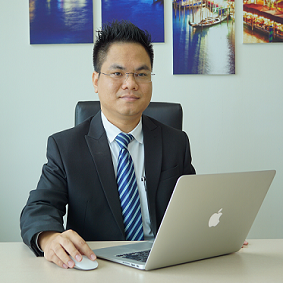 Lawyer: Nguyen Thanh Ha (Mr.)
Mobile: 0906 17 17 18
Email: ha.nguyen@sblaw.vn
Lawyer: Nguyen Thanh Ha (Mr.)
Mobile: 0906 17 17 18
Email: ha.nguyen@sblaw.vn